

Unexpected equipment downtime is one of the biggest operational and financial challenges in modern manufacturing industries. When critical machines suddenly fail, factories can experience production delays, missed delivery deadlines, reduced productivity, and significant repair costs. In many cases, even a few hours of unplanned downtime can result in thousands of dollars in losses and disrupt the entire production process.
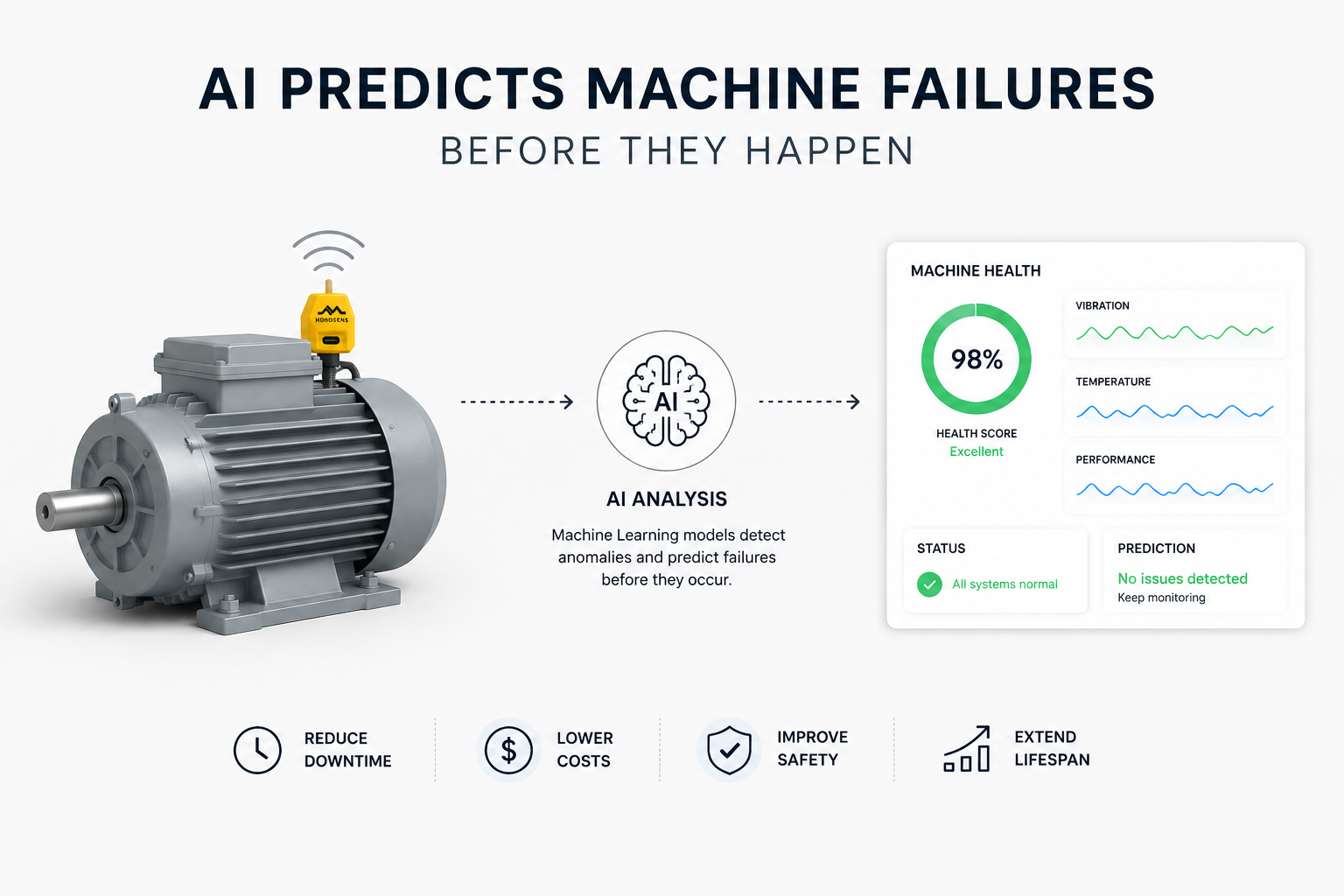
AI-powered predictive maintenance systems help manufacturers solve this problem by continuously monitoring machine conditions in real time. These systems analyze vibration signals, temperature changes, rotational speed, and operational behavior patterns to identify abnormalities before equipment failures occur. Instead of waiting for a machine to break down, maintenance teams can receive early warnings and take preventive action.
Using advanced sensor technology and machine learning algorithms, factories can detect issues such as bearing wear, shaft misalignment, imbalance, overheating, lubrication problems, and abnormal vibration patterns at an early stage. By recognizing these warning signs sooner, maintenance teams can schedule repairs during planned maintenance windows rather than during unexpected shutdowns.
Predictive maintenance not only reduces downtime but also lowers maintenance costs, improves workplace safety, increases equipment reliability, and extends the lifespan of industrial assets. It also helps companies optimize maintenance planning, reduce spare part waste, and improve overall operational efficiency.
Today, Industrial AI technologies are becoming more accessible and affordable than ever before. Even small and medium-sized factories can implement smart monitoring solutions without requiring massive infrastructure investments. With the combination of IoT sensors, cloud platforms, and AI-driven analytics, manufacturers can move from reactive maintenance to a more intelligent, data-driven, and proactive maintenance strategy.